Minggu, 24 Juli 2016

About something you really need

Something you might want to think about, a bit of asshat humor, and in the "Wrong then Wrong now" department...

I dont, as a rule, make pronouncements of the "everybody needs to have this" sort but every boat really needs some sort of emergency rudder that works if youre sailing out of cellphone range.

Ya think?

Fact is, building an emergency rudder that works does not cost a lot or take much skill and all of the information you need is available here for free.

That being said, there are folks who just dont GROK the DIY vibe or who are unwilling to spend the sort of silly-expensive costs of having a custom emergency rudder fabricated... Luckily for these folks there is a new emergency rudder that seems to make a lot of sense called the OceanSteer Emergency Rudder.


While not exactly cheap compared to a DIY affair it is much more reasonable than a custom fabrication. Better yet its designed to fit into a couple of flat packs so can fit into a cockpit locker or under a berth which makes a heck of a lot of sense. Definitly worth checking out.

Listening to Motion City Soundtrack

So it goes...
Read More..

Peter Duck

Peter Duck is a character in one of Arthur Ransomes famous children’s novels, in later life he commissioned Jack Laurence Giles to design a comfortable cruising ketch which was named after the character. The design was commissioned just after the war in 1945, built by Kings of Pin Mill in Suffolk she was completed in 1947


Ransome is alleged to have requested “a sort of marine bath-chair, a minimum of work to sail and yet provide the maximum comfort for two.” Whether Laurence Giles succeeded is not clear, but for whatever reason Ransome didn’t take to Peter Duck and sold her after only 3 years in 1950.


Although not a production boat, over 40 of these ketches were built. LOA is 28 feet 3inches long with a draught of 3 feet 6 inches and a beam of 9 feet. The original boat was fitted with a Stuart Turner engine. The detailed fit out of each is varied, but the overall design is recognised for its passage making ability even in heavy weather. The easily handled ketch rig made the boat popular with single hander sailors.

The original Peter Duck still survives, indeed flourishes under family ownership who have been custodians for much of the past 50 years.

Read More..

from John Fisher:
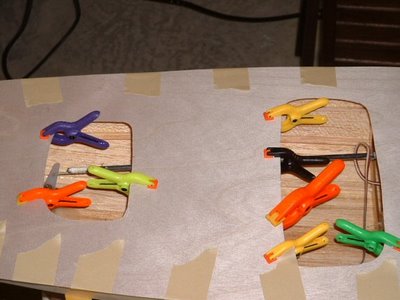
Attaching deck to hull

John Fisher photographer


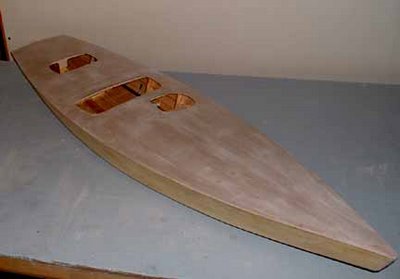
Hull with deck mounted:

John Fisher photographer


--------------------

HATCHES:

From Phil Geren:
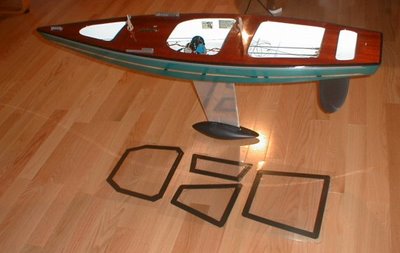
The simplest hatch cover solution I have found for Star 45 is to cut a piece out of Presentation Cover vinyl, which cut-out is shaped like the hatch opening but 1/4 or 3/8 of an inch larger on all sides. Then, apply electricians tape (1/2 or 3/4" wide) all around the perifery, so that half the tape is on the vinyl and half is hanging over the edge.

Presentation Cover vinyl which I get at Office Depot is about 15 cents a sheet; it is about 0.008" thick; it is slightly over 8.5X11" in size; a full sheet weighs about 16 grams; it is stiff, but flexible; it is crystal clear, but if you want it opaque, just wet sand it with #400 grit wet or dry sandpaper.

Position the hatch cover over the hatch so that the tape extends evenly past the hatch opening an equal distance all around, and then just press on the tape to stick it to the deck. Its waterproof, durable.

You can make spares and stick them to another piece of vinyl and carry that with you to the races. That keeps spares nice and flat and keeps the tapes sticky side clean for future use. A set of these hatch covers usually lasts me all season. At lunch, I take one cover off to allow the boat to dry out, sticking the cover to a dry vinyl sheet to keep the tapes sticky side clean.

Photo is Star 45 #778, freshly rebuilt for the Nationals this year, and a set of covers on the floor next to her.


Phil Geren photographer


--
from Uncle Dave:
I pulled one of my old Star45s from the attic and have it here in my workshop. It has a fiberglass Sirius 45 hull, a aircraft ply deck and aluminum keel fin. Unfortunately it is not one of my finest examples of workmanship or painting. However Ill suffer the embarrassment and use if to show some one style of hatch construction.

Carrying around a model around out of the water is no big deal. Taking a model out of the water can be something else. You first need to hang onto the model. Then find a place to take hold to lift the model. This is one of the reasons I have used easily removable hatches. You can grab the model through the hatch, fingers under the deck and pick it up. Of course a thin ply deck the model deck and hatch construction needs to be strong enough to withstand pulling on the deck and lifting a twelve pound plus model. Therefore I braced my decks around hatch areas.

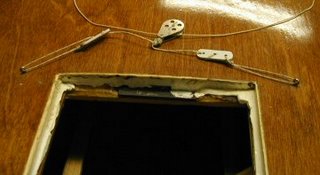
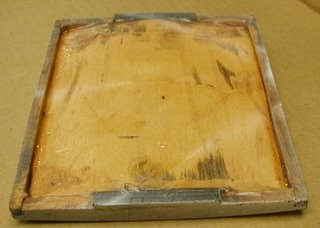
First I built a flanged frame for the hatch to sit in that also extended under the deck and attached to the deck bracing.
dlm_hatch_a.jpg

Then I built a hatch cover based on the size of the hatch. Initially the hatch cover was made to fit very loosely in the hatch. I then took some silicone (tub seal or similar) squeezed a bead around the shelf/lip of the hatch. The covering the hatch opening with food wrap poly sheeting Id push the hatch cover in place down into the silicone. This made a nice water tight gasket around the edge of the hatch. After waiting a day Id remove the plastic, trim and silicone that showed topside. With the silicone dry, pop the hatch cover in place and check the fit.

dlm_hatch_b.jpg

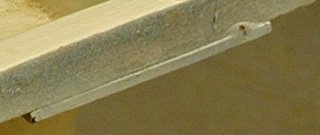
I placed a strip of magnetic tape on either end of the cover and on each end of the hatch frame.

dlm_hatch_c.jpg

When the hatch cover and hatch mag tapes touched they pulled together. This magnetic tape is neat stuff you can pop the cover in place and it will stay put.

Typically I made my hatches about 4"X5" giving me plenty of deck to the sheer.
fixed_travelersml.jpg

I heavy weather if the model might go over on beams end Id cover the seams with tape just to be extra watertight. A 4X5 hatch gives room to get inside, adjust winch, radio etc, and to remove any water that got into the bilge while sailing.

Read More..

The Goat Island Skiff Project Begins


Michael Storers Goat Island Skiff is a GREAT boat. We decided to build one for ourselves and use the boat as a test for producing high-quality, perfectly fitting kits to sell to amateurs and other professionals with little time on their hands. The goal for these kits is that they produce a hull with perfect lines that have been adjusted by a professional so new boatbuilders can get a fair hull that goes together easily. Every boat needs refinement. With our patterns, a CNC file will be made, and CNC kits will be produced. With Storers thorough manual, a new boatbuilder can build a great boat for themselves and enjoy doing it because things fit and much of the tricky work has been done for them. Time will be saved and boatbuilders can get on the water sooner.

Clint modified the boat by adding a mizzen, making the boat more along the lines of a sail-and-oar boat and more easily singlehanded.
Read More..

Knud Reimers Tumlare or Tumlaren


unattributed


Gokstad Faering


courtesy Vikingskip og norske trebåter


Knud Reimers


courtesy Swedesail


An original Reimers drawing of Tumlare

unattributed


unattributed


unattributed


At 10,000 pounds of Nordic pitchpine and steam bent oak frames, Egret shows some power in a breeze. This photo was taken on Clear Lake in Northern California where she served as the testing boat for Penofins Marine Oil Finish.

courtesy Penofin


Courtesy Knockabout Sloops


A great photo of her unique double cockpit arrangement that puts the helmsman aft at the tiller, the two jib winches are the only winches on the boat as sails were hauled aloft on their halyards by hand. Beside the winches are the running back stays. See the original compass on the strong back between the two cockpits. A single-cylinder diesel was added in the 1980s. Hidden appropriately under the cockpit and which greatly improved her handiness in tight docking situations.

courtesy Penofin


Courtesy Knockabout Sloops


History: Built over a five year period beginning in 1947 by Bob Stevens in his backyard ZEFIR (Swedish for Zephyr) was built as Knud Reimers designed with hot zinc galvanised frames and floors, with well seasoned Jarrah garboards and Queensland Kauri topsides. Three years later after Bob returned from Europe and the USA he found the hull structure in perfect condition to continue ribbing with hot steamed bent intermediate laminated Karri timbers, Spruce deck-beams and cabin and cockpit structures.

courtesy Classic Yacht Association of Austrailia


She was raced successfully in Port Adelaide by Bob until the early sixties and one other Adelaide owner then sold to Howard Fox in Melbourne in 1975 when her name was changed to ZEPHYR. As a “cruising” Tumlaren, much heavier than the majority of Tumlaren built in Melbourne and raced from Royal St Kilda Yacht Club (now Royal Victorian Yacht Squadron) Zephyr didn’t feature on the winners list in the very active racing regime of the Tumlaren Association. She was purchased by Kevin Read in 1993 after coming ashore at St Kilda and had two major restorations that replaced the galvanised ribs and floors and completely refurbished the hull and cabin and finished with a laid teak deck. She is now owned and raced by Anne and Karen Batson and is penned at the RYCV Williamstown.

courtesy Classic Yacht Association of Austrailia


A Tumlaren at the Hobart Wooden boat Festival

courtesy Dan Gadd


Arguably Knud Reimers Tumlare falls into the very narrowest selection of the most beautiful objects ever designed by the hand of man. Certainly she is the equal of the little Gokstad Faering pictured above (and of which she is undoubtedly a descendant), at least in elegance and seaworthiness, if not in simplicity. Reimers designed her in 1934 as a 20 square meter sloop for racing and cruising. Below are some thoughts on the boat from a couple of admirers.

From the sadly now defunct weblog Knockabout Sloops:

I have been rereading Lin and Larry Pardeys "Seraffyns European Adventure" and I came across this description of one of Larrys early boats, a Knud Reimers Tumlaren, that he raced and cruised when he lived in Vancouver.
When Larry was nineteen hed fallen in love with a twenty-seven foot Tumlaren class sloop designed by Knud Reimers and called Annalisa. Shed been built by the Kungsor yard near Stockholm in 1948 for the crown prince of Denmark. By taking a bank loan, countersigned by his father, Larry had been able to buy the completely varnished sloop and for five years he raced and cruised her around Vancouver. From the time I met him, two years after he sold Annalisa, Larry had raved about his magnificent sloop. Id almost grown jealous for Seraffyn as he described the extreme lightweight, scientific construction of the narrow, delicate Tumlaren. Seraffyn is twenty four feet four inches long with a beam of nine feet, and weighs close to eleven thousand pounds. Annalisa, at twenty seven feet on deck, was only six feet and displaced only thirty eight hundred pounds. As we cruised north through Swedens multitude of islands I came to appreciate the ideas behind the Tumlarens design. She, like the much better know Folkboat class, had been created for families who had protected waters to sail in. From a hundred fifty miles south of Stockolm north to Finland and east to Helsinki, a stretch of over six hundred miles, there are so many islands and anchorages that there is never a need to be more than four or five miles from land. The islands keep the seas flat with only occasional chop. Tiny villages dot the archipelagos so a family cruiser need carry only a few days worth of supplies. But the intricate passages around the rocks and islands require boats that are handy to tack and close winded, boats that accelerate quickly to use each puff of wind that whispers around the points and trees. These boats are built light to save money since they can only be used three or four months out of the year. We saw hundreds of them throughout Sweden and Denmark, and many are sailed without engines.

From Classic Yachting:
Tumlaren was once called “The most advanced type of cruiser in the world” by another famous yacht designer, Uffa Fox!
Tumlaren was designed by Knud H Reimers in an attempt to marry the characteristics of a “koster”, longish and narrow, with those of the faster Square Meter Yachts that where very popular in Scandinavia at the time.
Tumlarens characteristics are very easy for, aft and water lines. And the yacht was like so many of Reimers designs designed on diagonals, all on diagonals, all of which cut the sections squarely a technique that makes it easier for the boat builder to do the laying down and fairing up.
The yacht has a sharp bow and a rounded stern that founded the British expression “Tumlaren stern” and other similar nautical expressions.
Tumlaren has an aft cockpit with just enough room to hold a helmsman. The main sheet is attached to a traveler on a wooden strong-back that separates the aft cockpit from the main cockpit. The interior accommodations are very Spartan with full length settee berths port and starboard and a v-berth forward the mast. In total allowing her to sleep four but this is very cramped with today’s measurements of yachts. Aft the port settee is normally equipped with a small alcohol stove and storage lockers. Additional storage lockers are found to starboard.
Tumlaren was also designed and built in a bigger version, the Stor Tumlaren (meaning “Large Tumlaren”) and in total there where more then 600 Tumlaren built.
Knud Reimers Tumlaren can today be found on all the worlds’ continents and in at least 24 countries. In Australia it early became a one design racing class and the building and measurement where adopted to locally availble wood types.
Today Tumlaren are very sought after classic yachts and prices vary from a couple of 100 USD for renovation projects to 30 000USD+ for nice examples.
New built Tumlaren are still available and among others a there is a Finish company named “M-Yachts” who still build them in wood.

More on Knud Reimers here.
Read More..

Boat vs Whale

A couple of days ago a sailboat named "Luffin It" entered the harbor under tow. It was a Pearson 367, a 36 foot cruising cutter that is slightly larger than the Honcho. I have downloaded a couple of photos of a sistership, which I got from Yachtworld.com to give you a sense of the size and shape of this boat. Or you can visit this web site for a lot more information on it: http://www.yachtworld.com/core/listing/boatMergedDetails.jsp?boat_id=2013084&ybw=&units=Feet&currency=USD&access=Public&listing_id=1644&url=
Pearson 367
Sistership to Luffin It
Luffin It was leaving Bahia Tenacatita a few days ago when it came into contact with a whale. The result was a severely damaged boat and what I can only speculate was an unhappy whale. Fortunately, aside from a few bumps and minor bruises, there were no injuries to the couple onboard, and no visible injuries to the whale.
The whales tale was apparently caught between the keel and rudder. The bronze strut is about 1/2" thick and was bent nearly 90 degrees

I spoke to the owners about their experience and looked at the boat after it was hauled out at the La Cruz Shipyard. They were under sail around 1530, moving at a slow 3-4 knots on a course taking them out of the anchorage at Tenacatita, headed toward Chamela when the whale apparently attempted to surface, unaware that there was a boat above it. They felt the boat heave upward and thought at first that they had run aground, but then immediately saw the whale close alongside with its tail apparently still under the boat and caught between the keel and rudder. In its effort to free itself it flapped its tail several times before swimming away. It left the boat with a bent propeller shaft and strut, a chunk missing from the rudder, and structural cracks in the hull. This is what was visible from the outside. The owner told me that the internal damage was extensive. Many of the internal bulkheads and floor timbers were displaced as the hull flexed, knocking the head loose, jamming doors and drawers, and other damage. They immediately broadcast a mayday on their VHF radio and within minutes other cruisers in Tenacatita came to their aid. They got the leaks under control and eventually made it to La Cruz, partly under their own power and partly under tow.  You can read their firsthand account of the incident on their blog: http://www.sailblogs.com/member/luffinit/?xjMsgID=164231

We dont usually wear lifejackets when were sailing in light air and flat seas, and the crew of Luffin It werent either. Fortunately neither of them went overboard, but its a reminder that you never know when a life threatening emergency will occur, and its good policy to wear your PFD all the time. I dont plan to do that but well keep them at the ready in the cockpit in the future.

Whale sightings are very common in these parts this time of year. I cant count how many times weve been sailing along on a perfectly peaceful sea when suddenly a whale comes rocketing out of the water like a submarine launched cruise missile within a couple hundred yards of the boat. There is no warning, just an explosion of white water and a whales head 20 or 30 feet out of the water. Such displays inspire lots of respect from us. I did some searching on the Internet regarding how much power resides in a whales flukes and could not find an answer but it is clearly an enormously powerful animal, as the encounter between Luffin It and the whale shows.

How can sailboats safely travel upon seas that are also home to these magnificent animals? Aboard the Honcho we take a few precautions, but I dont think there is any reasonable way to prevent all accidental contacts with whales. During the nighttime hours we frequently run the diesel engine whether or not we have sails up. The hours of darkness are a good time to charge batteries, run the watermaker, etc. and I think the engine noise might help to let the whales know were in the neighborhood. Some people play music instead of running the engine. At any rate, Im fairly confident that sailboat/whale collisions are very rare, and most likely accidental. Still, its something to think about as we share the ocean with them.

Read More..

Sabtu, 23 Juli 2016

Fairey Atalanta

Decked out for the Royal Jubilee this Fairy Atalanta has its origin if not precisely in the Coronation year 1953 but is certainly a product of that post war period of English enthusiasm and innovation.

Fairey Marine applied hot moulded wooden construction developed in wartime, to production boat building, the technique enabled light weight and strong construction in the days before GRP became ubiquitous.

History recalls the Atalanta came about through the collaboration between Allen Vines a senior Fariey Marine executive and designer Uffa Fox, the Atalanta was conceived as a trailable shallow draft performance cruiser with the sea keeping capabilities and safety of a fin keel yacht.


There were three variants of the Atalanta, a 26ft (8.1m) hull with a slightly shorter cockpit and more headroom called the Titania (named after another Fairey flying boat), a larger version the Atalanta 31 (9.45m) and the Fulmar a 20ft(6.1m) version with a single lifting keel.


In 1955, Fox designed a 24ft (7.32m) prototype based on some of the concepts demonstrated by Vines in a development of the companys Albacore and after extensive trials the first 26ft (7.92m) Atalanta class boats were launched in June 1956. By 1968, when production ceased, some 291 Atalanta variants had been built at Fairey’s Hamble Point yard.

The Atlanta has a double berth cabin aft and a two-berth cabin, galley and heads forward. The self-draining cockpit has room for six, the unconventional but practical whipstaff tiller allows the maximum space to be utilised. Control lines, and halyards are handled from the cockpit and the headsails and anchor can be deployed by standing in the forehatch. The relatively modest rig and sail area needed to drive the lightweight hull make for easy sail handling as well as lower capital cost, with the additional benefit that the short mast is easily rigged or lowered for towing.


Many of these craft are still sailing and there is an active owners association plus you can follow Atalanta owner and fellow blogger Roy Woolley for first hand insight.
Read More..