Minggu, 31 Januari 2016

Bahia de Concepcion to La Paz


Bahia de Concepcion is dotted with rocks like this. 

On our way north, we were headed directly into the wind for nearly all of the distance between San Juanico and Concepcion, so I had hoped that wed have a fair wind for the southbound passage back to San Juanico. But it was not to be. We rounded Punta Concepcion and headed southeast toward our destination only to find the wind dead on the nose again. I needed to run the watermaker anyway so we motorsailed and over the next few hours refilled our water tanks. By noon the wind had backed around so we could sail and we arrived at Caleta San Juanico around 1700, anchoring just off the beach in the far southeast part of the bay. Earlier in the day we had picked up something on the prop and it vibrated a little when I put the engine in gear. The anchor had barely hit the bottom before Lisa jumped in the water and pulled a clump of seaweed off the prop.

The next day we were up early and cleared the rocks that lie off the southern end of San Juanico at 0900. Naturally the wind was out of the southeast, exactly the direction we were headed. So we motorsailed most of the way to Puerto Escondido, slowing down a bit as we passed the town of Loreto to grab some Internet time. This would be our last chance to download weather until we get to La Paz several days hence.

We arrived in Puerto Escondido in mid-afternoon and anchored in the lagoon. Loreto Fest was in full swing when we arrived so we went ashore to give it a look. It is hosted by the Hidden Port Yacht Club and some local businesses. Its a cruisers event with a few seminars,  bocce ball tournament and a few other games. There was a silent auction and swap meet, a band and plenty of beer and margaritas. It looked like the event was geared toward the permanent or semi-permanent denizens of the Sea of Cortez. Anyway, it didnt appeal to us and we were out of Puerto Escondido at 0700 the next morning, bound for Puerto Los Gatos.


Its always fun to explore the rocks of Los Gatos

With a 2-3 knot headwind, we motored all the way and were anchored in the north side of the bay around 1300. Los Gatos is a beautiful bay, about a mile long in the northeast-southwest direction and a bit less than half a mile deep. The high bluffs to the north offer good protection from winds from that direction but the bay is wide open to southerly and east winds. There is nothing here except pristine beaches, fantastic rock formations and crystal clear water. There was only one other boat anchored way over in the other side of the bay so we were all set to have a quiet evening aboard. But just about dusk I noticed that the other boat was under way. At first I thought he was heading out of the bay but then he turned toward us. Okay, I thought, he just wants to swing by and say "Hi" before heading out to sea. But no, he came right past us and anchored about halfway between us and the beach, his bow not fifty yards from our stern. Im not sure why.

Earlier in the afternoon a two fishermen came by in a panga and offered us a couple of live lobsters so we had an excellent grilled lobster dinner. The next morning they brought us three more bugs. Were living like kings out here in the boonies! During the day we hiked the shores of the bay.
The rock formations here are incredible. As far as I can tell, no one has ever lived here, and the land seems to be untouched by humans.


And yet, Nature toys with our imaginations. As the sun moved westward the shadows shifted to reveal a man and woman that have been sunbathing here for ages.


Finisterra in peaceful Los Gatos. The Sierra de la Giganta Mountains are in the background.
We departed Los Gatos early in the morning on May 5th, bound for Isla San Francisco. Our course was southeast so naturally the wind, what little there was of it, was coming straight out of the southeast so we puttered along all day and anchored in the beautiful cove called The Hook, on the southwest side of the island at 1600. The water was crystal clear and 80 degrees. Perfect for a swim. It was also about time to scrub Finisterras bottom so we got masks, fins, snorkels and cleaning utensils and gave her a good scrubbing. There were quite a few small barnacles that popped off with a plastic putty knife.

Another view of the majestic Sierra de la Giganta Mountains

Isla San Francisco is a popular place and there were half a dozen boats already anchored there when we arrived. Then around sunset the Safari Voyager came into the bay. Its a small cruise ship with a capacity of 64 eco-tourists. We were thinking it was going to be mighty crowded on the beach tomorrow morning but the ship left at dawn and we thought wed seen the last of them. So we got up early and went hiking, thinking we had the island pretty much to ourselves. But as we set off across the low isthmus that bisects the north and south parts of the island we spotted a line of tourists trekking across our path. The Voyager had simply gone around to the other side of the island, where there was less of a swell for the tourists as they came ashore in a pair of large inflatable boats.

Safari Voyager

Eco-tourists on the march. This is the view we were greeted with when we topped the first rise on the west side of the isthmus.

We spent a couple of days at Isla San Francisco then with a northwest breeze in the forecast we headed south to La Paz where we plan to stay for a couple of weeks. Once outside the bay, I was all set to hoist the mainsail when the wind suddenly turned around and blew out of the south against the prevailing northerly swell which made for a bumpy ride to La Paz. On the way we spotted "Venus", the mega yacht that was built for Steve Jobs anchored just outside the harbor.
Venus is 256 long and the interior styling was done by Philippe Starck, who also did the interior on our last boat, Honcho. Venus is reputed to have cost $100 million Euros.

As we approached the harbor entrance I radioed the harbor master at Marina Palmira that we were a few minutes out. She gave me our slip number and some other info and signed off. So were coming down the narrow channel at the marina entrance with a fifteen knot tailwind and a dinghy in tow when we noticed a man on the jetty waving to us. Lisa is the sociable one among us so she waved back. Then he started waving harder and she said "I think hes trying to tell us something", but we couldnt make it out, so she went up to the bow to try and get a better understanding of what he was yelling and then suddenly noticed a 15" dredge pipe laying all the way across the channel. So she started waving and yelling at me to "Stop! Back er down! Your gonna hit a pipe!". So I slammed the engine into reverse and managed to keep from hitting the pipe, but with fifteen knots up the bum and a dinghy in tow, we were in danger of getting sideways in the channel, which would have been a bad thing since we had rocks on one side and big motor yachts on the other. But I managed to keep the boat lined up in the channel and they moved the dredger enough that we could squeeze by it with three or four feet of clearance on either side.

After we got the boat in the slip, we went up to the office to check in. While we were waiting another boat radioed that they were coming in. I could hear their entire conversation and the nice lady told the skipper what his slip number would be, gave directions on how to get there and signed off without ever mentioning the dredger blocking his way. I told her it would be a good idea to advise the unsuspecting sailor that the channel was blocked. She agreed and made a halfhearted attempted to hail him on the radio, but by then he was most likely in the midst of trying to keep his boat from slamming into the dredge pipe and he didnt answer. You never know when sailing in Mexico is going to become an adventure!

Anyway, were enjoying la Paz and expect to be here for a couple of weeks. We plan to take in the sights, maybe catch a glimpse of the Mexico 1000 off-road race and tour the East Cape. 
Read More..

Sabtu, 30 Januari 2016

XOD X One Design

Every time I go past the local fleet of XODs I cant help but admire these handsome keel boats, which are (I believe) the only fleet of wooden keel boats on the Hamble River. Although Im not a dedicated racer, one of these would be just the thing for a summer afternoon sail and picnic.


Hamble division racing is run principally under the Hamble River Sailing Club on Wednesday evenings and Saturday afternoons. Every month there is Sunday racing under the Royal Southern YC regatta series. The season is between mid April and mid to late October, 22 boats are in the water in any one year, 12 boats race regularly, the remaining 10 are less active.

2011 will be the 83rd year of XOD racing at Hamble River Sailing Club.

Racing crews from the he Lymington and Yarmouth fleets will be decked out in the fashions of 1911 when they mark the Centenary of what has become the UKs largest keelboat racing fleet, with a celebratory race at Lymington on Friday 3rd June.

1911 was the year when seven XODs raced as a fleet for the first time, that race was won by a Portsmouth brewer named Harry Brickwood competing against such gracefully named Xs as Mistletoe, Mayfly, Mischief, and Merrymaid. One of them, X5 Madcap, survives and still races actively today.

The X One Design was designed by Alfred Westmacott, who was Managing Director of Woodnutts Boatyard at St Helens on the Isle of Wight. He specialised in building small day racing boats and these included the Seaview Mermaid, Solent Sunbeam and Victory.

Although the XOD was designed by Alfred Westmacott in 1909, the first race did not take place until 1911 and so it has been decided to celebrate the 100th anniversary in 2011.

The X Class is unique in having six active fleets around the Solent area, between Chichester Harbour in the East and Poole Harbour in the West. In each of the locations a well established local Club manages the racing.
Read More..

Jumat, 29 Januari 2016

Tai Mo Shan

Thanks to Patrick for providing details of what might be one of the most recognisable yachts around.

The oldest star in the Hollywood film version of “Mamma Mia!” was a beautiful yacht, already in her 70s at the time of filming. And it has to be said that, unlike Pierce Brosnan whose singing was questionable, she never put a foot wrong in the part.


Tai Mo Shan was built in Hong Kong for a group of 5 young Royal Navy officers who had the idea of sailing all the way home to the UK. Her designer H.S. Rouse was the Vice-Commodore of the local sailing club and an enthusiastic amateur naval architect. Only a few yachts are known to have been built to his designs, one of the others being the even more famous “Tzu Hang” in which Miles and Beryl Smeeton sailed around the world.

To save money Tai Mo Shans first owners economised on a couple of items that would these days be considered indispensable – a motor and a heads. However, they did not stint on quality materials and the Whampoa Dock builders used the finest they could get; teak planking, frames of rare Ipil wood, a yacal keelson, a camphor wood stem, steel floors and a lead keel made her both tough and beautiful. When surveyed many years later she was described as having being built to twice the normal Lloyds yacht scantlings.


Although keen to save on unnecesary items, naturally these officers wanted to be properly outfitted for a long ocean voyage, and so all of them made sure to take their dinner jackets with them. These turned out to be useful as they were entertained lavishly in many of the ports where they stopped en-route, including in Japan, where, with encouragement of the Admiralty, they attempted to spy on the Japanese navy.

Tai Mo Shan made it back to Britain and has had a succession of caring owners over the past 75 years. Her first owners went on to have distinguished careers, between them winning many wartime medals and honours, including a VC.


Follow the links below to read much more about this great yachts history and see lots of interior and exterior photos.

http://classicboatindex.com/boat_details.php?textfield2=9

http://lintonsview.blogspot.com/2009/11/abbasubmariners-and-spying.html

http://www.coburgbrokers.com/tai2.html

http://www.coburgbrokers.com/tai3.html

For information on the service careers and later lives of the original owners see http://lintonsview.blogspot.com/2009/11/abba-submarinersand-spying-2.html


Read More..

In the buyer beware department

Some hardcore Dazzle, cleaning up trash in Patagonia, and its funny how when I read this I found myself thinking of current trends in yacht design, boat building, and the cruising community...

Yesterday I came across someone who was selling a mounting bracket for a self-steering gear and asking $1000 for it as it was "new" and if you were to buy it from the company who made it youd be out of pocket for nearly $1600.

I found the quoted retail price to be doubtful so trundled over to the companies site and lo and behold the part in question cost $1593... OUCH!

I then check my various materials catalogs and price lists to see what the actual cost of said bracket amounted to and came up with a number of around $150 for materials and labor so with a 100% markup lets say a fair price would be somewhere around $300. Of course, those figures are based with me going out and building one bracket and we really should factor in that a company building many gears would have the added advantage of bulk buying materials, labor saving tooling, and systematic production so the cost should really be a whole lot less...

Which tells me theyre either inept, greedy, or a combination of the two. Pretty normal for a marine business in the year 2015.

I hear a lot of excuses on why marine businesses have to price stuff at silly prices... small market, niche market, and so on but every time I look at silly expensive products I still find that theres a certain aroma akin to five-day old mackerel festering in the sun somewhere in the mix...

That said, the fault is really not with the builders and providers of said gear because faced with consumers who will blindly pay silly money for gear simply because its for a boat, even the most honorable person will be hard pressed not to take advantage and price their products accordingly.

Just something to think about while youre catching your breath from your Black Friday adventures,,,

Listening to the Battlefield

So it goes...
Read More..

Kamis, 28 Januari 2016


Have been working too hard in the workshop, and blog entries have suffered. However, paid building jobs are almost finished, and the website is being populated with several design page entries, and an increasing number of items on the "Shop" page.

After mid-September, I will be working predominantly on designs, website content, small video production, and more regular blog entries. Ive got a stack of material from workshop jobs over the last year or so - have just been lacking time to edit photos, write copy, and publish material.

Much more to come very soon.

http://www.baysidewoodenboats.com.au/
Read More..

Rabu, 27 Januari 2016

Los Cabos to Ensenada

We waited patiently for that weather window and it finally materialized on June 19th. We departed San Jose del Cabo at 0830, motoring into a 3 or 4 knot headwind under a gloriously sunny sky. Its about 17 miles from San Jose to San Lucas, and during that time the wind increased to about 17 knots and the sea temperature plummeted from 82 to 70 degrees.

We rounded the point at San Lucas around noon in a building breeze. By the time we reached Cabo Falso, about 4 miles further on, the wind was a steady 27 knots on the nose, with gusts to something over 30. Staying close inshore, we rounded Falso and headed northward along the coast and by 1500 the breeze had dropped to about 12 knots and the rough seas were replaced by easy westerly swells.  Late in the afternoon the breeze dropped even further, and we motored for the next twenty four hours over glassy swells and almost calm wind.

Route from Los Cabos to Turtle Bay.


We arrived at Bahia Santa Maria, about 200 miles from San Jose in the early afternoon of June 20th and anchored about half a mile off the beach in the northwest corner of the bay. We were hoping to go ashore here and explore the beaches and nearby sand dunes, but there was enough of a southerly swell running to make a dinghy landing untenable.  Instead, we got the anchor up and headed out of the bay and into a favorable wind. We sailed all afternoon and into the night until the wind shut off completely around 2100. We arrived at Turtle Bay at dawn on June 22nd. It was a pleasant, quiet day and we spent it catching up on sleep while we waited for Enrique to deliver some fuel, which he did in the late afternoon.

The favorable conditions we had been enjoying were forecast to end soon, so we got underway just after sunrise on June 23rd. Choosing to go up the east side of Isla Cedros, we motored into a very light headwind and flat seas as far as the Dewey Channel, which lies between Isla Natividad and the mainland. There we encountered rough, confused seas until we reached the southern tip of Cedros which provided protection from the northwest wind and seas. The easy conditions lasted until we reached the northern tip of the island. Once beyond the lee of the island we had 20-25 knots of wind on the nose and 5 foot seas for a couple of hours, then the wind moderated but the swells remained big and steep. We slowed to 4 - 5 knots for the next 50 miles to keep the boat from pounding in the unfriendly seas. Throughout the passage from Cedros to Sacramento reef we were bucking a current that sometimes reached a knot and a half.

On the morning of June 24th we passed about 10 miles west of Sacramento reef and found the counter current here to be around half a knot. The rest of the passage to Punta Banda consisted of motoring into 3 to 8 foot seas and overcast skies. We rounded the point around noon on June 25th. With a fair wind, we doused the engine and sailed the last ten miles to Ensenada where we took a berth on gangway A in the Cruiseport Marina. The plan is to stay here until after the Fourth of July holiday, then head north to San Diego for a few days.

Turtle Bay to Ensenada


A few miles south of Punta Banda we were joined for a few minutes by a pod of Orcas. I was so fascinated looking at them, I didnt get many photos.


These are females. Males have taller, more vertical dorsal fins.


While here in Ensenada we were immediately among friends and have been spending our time socializing and cleaning up the boat after the long bash from Los Cabos. A couple of days ago I decided to put a couple of coats of varnish on the cap rails. The first coat went on the starboard rail perfectly, but today, about an hour after I finished putting the second coat on, a squall passed through, dropping a sprinkling of rain. I thought my varnish job was ruined but luckily it survived intact.

Ensenada is our last destination in Mexico, so Ive been taking some time to reflect on all we learned about this beautiful country on this voyage. We saw so many beautiful sights and enjoyed the company of lots of friends, both Mexicans and foreigners, its hard to name one specific thing that stands out as special. I guess the main impression that Im taking with me is that Mexico is getting better. The people seem to have a continuously improving standard of living. The roads, schools, cities and infrastructure all seem to be getting better. Economic activity and industry are vastly better than they were when we cruised here aboard Honcho five years ago. But one thing that hasnt changed is the wonderfully friendly people of Mexico. In my opinion they are among the nicest in the world.

When we arrived here in Ensenada we learned of the recent supreme court decisions in the USA regarding health care and gay marriage. Good health care available to everyone, and tolerance for diversity among our people are worthy goals, so its a nice feeling to know that we are returning to a better USA.


Read More..

S45 Construction John Fisher keel tubes

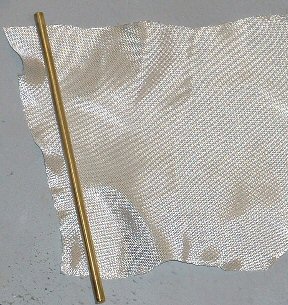
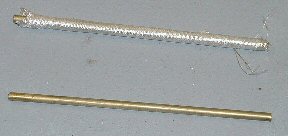
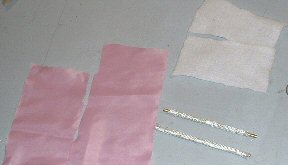
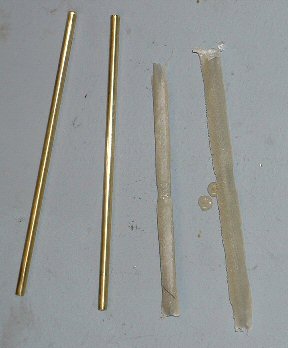
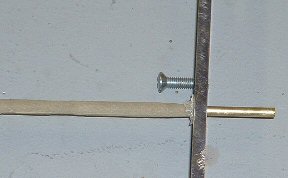
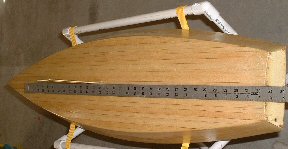
Photo sequence showing how John Fisher made his keel tubes. He was mounting a keel from CPM (David Ramos) with longer keel bolts so they will go through the deck when finished. He coated the brass rod with carnuba wax as a mold release.


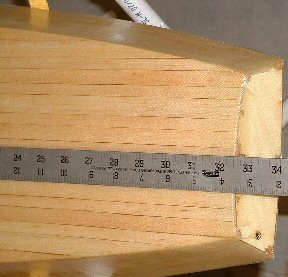
To align the keel tubes John drills the holes in the center of the boat, this is easy to find since it is simply the middle of the king plank and the middle of the two keel planks. Then to align them so they are straight he placed a metal ruler along the two keel bolts or if a flat plate along the plate. Then look at where the end meets the transom. It should be off center by half the amount as the bolts/keel are thick.

John does this on both sides to make sure it is centered. Once the bottom is aligned he tacks it in place with CA, then verify the alignment at the deck the same way.


Read More..